If you’re working on overseas power distribution projects, you’ve probably come across single-phase pad-mounted oil-immersed transformers. This equipment may seem unremarkable and small in size, but it’s critical to the stability of residential areas, photovoltaic power plants, and energy storage systems. Many purchasers and engineers have asked me: What are the real advantages of this equipment? How to avoid pitfalls when selecting it? Today, drawing on years of on-site experience with overseas projects, I’ll break down the key points in plain language, so you can skip the guesswork and make informed decisions.
I. What Is a Single-Phase Pad-Mounted Oil-Immersed Transformer?
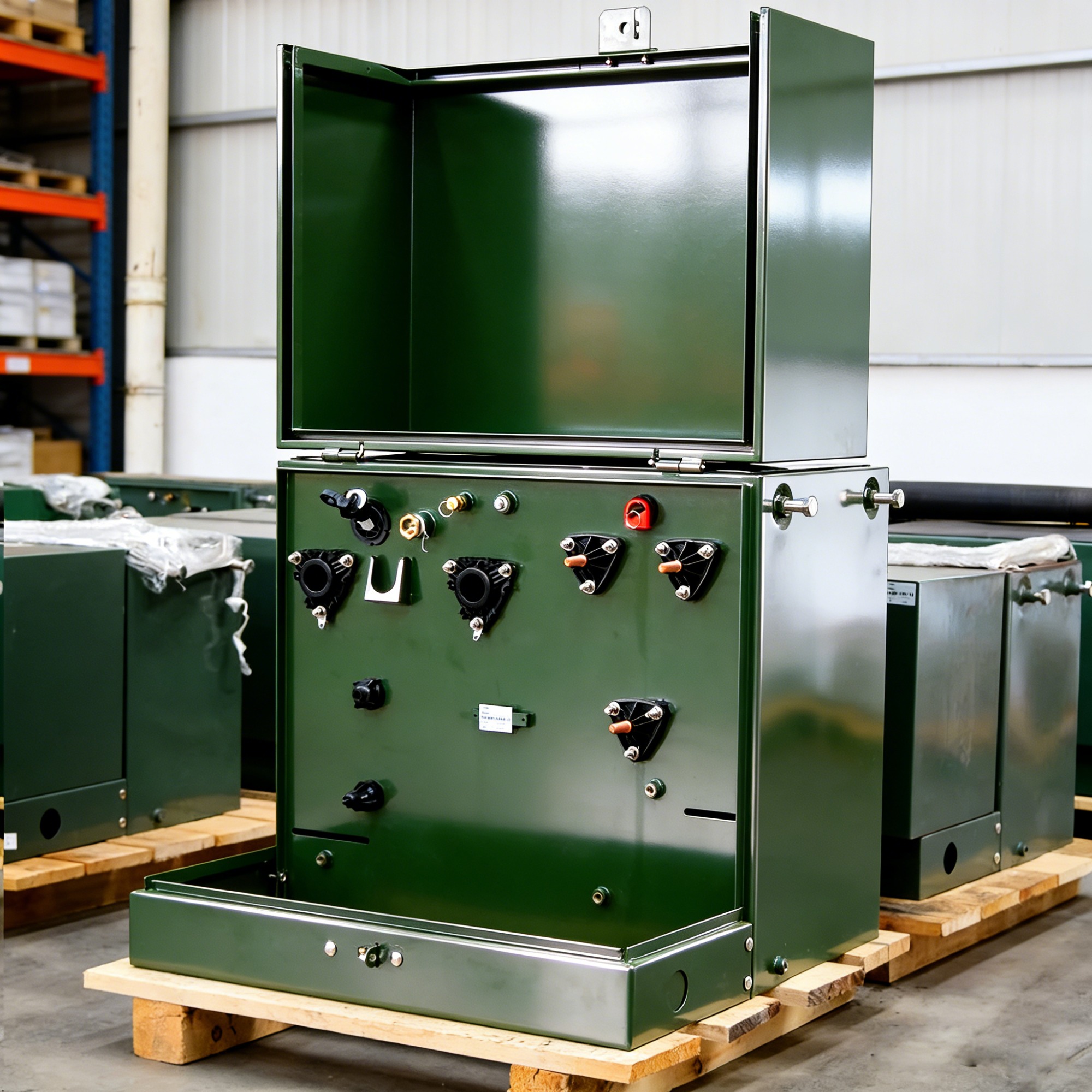
Let’s start with the basics: A single-phase pad-mounted oil-immersed transformer is a fully sealed power distribution device installed on a ground base, cooled and dissipated by insulating oil. Its core function is to convert medium and high-voltage electrical energy into low-voltage electrical energy for civilian use. The most convenient thing about it is that it doesn’t require utility poles or a dedicated power distribution room—you can place it directly outdoors or semi-buried underground, making it safe and space-saving. It’s widely used in overseas power distribution projects.
In regions like North America, the Philippines, the Middle East, and Australia, this transformer is everywhere—from residential areas and commercial districts to photovoltaic power plants and energy storage projects. It’s designed to adapt to the power grid standards of different overseas regions, requiring no additional modifications; you can use it right out of the box, significantly saving project time and costs.
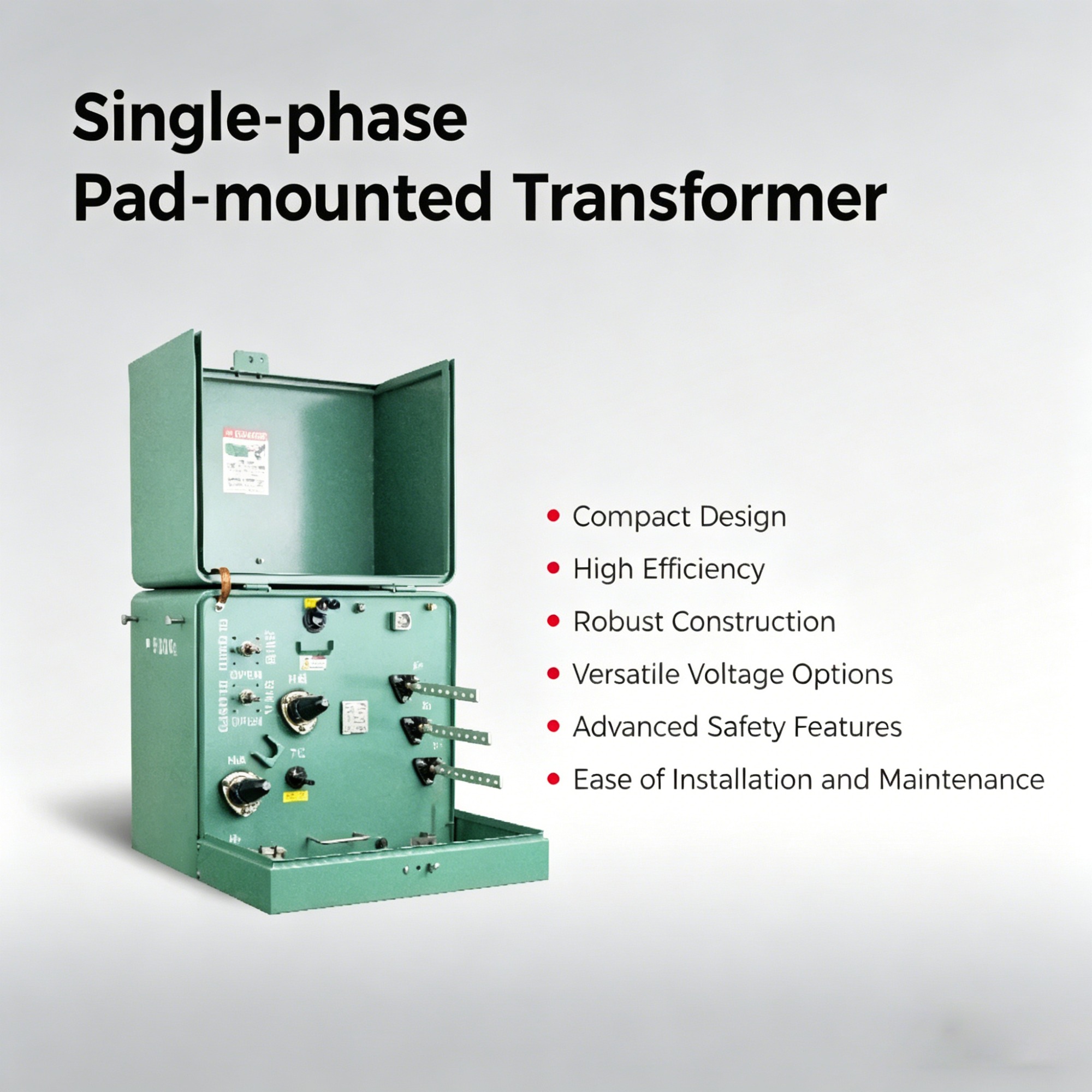
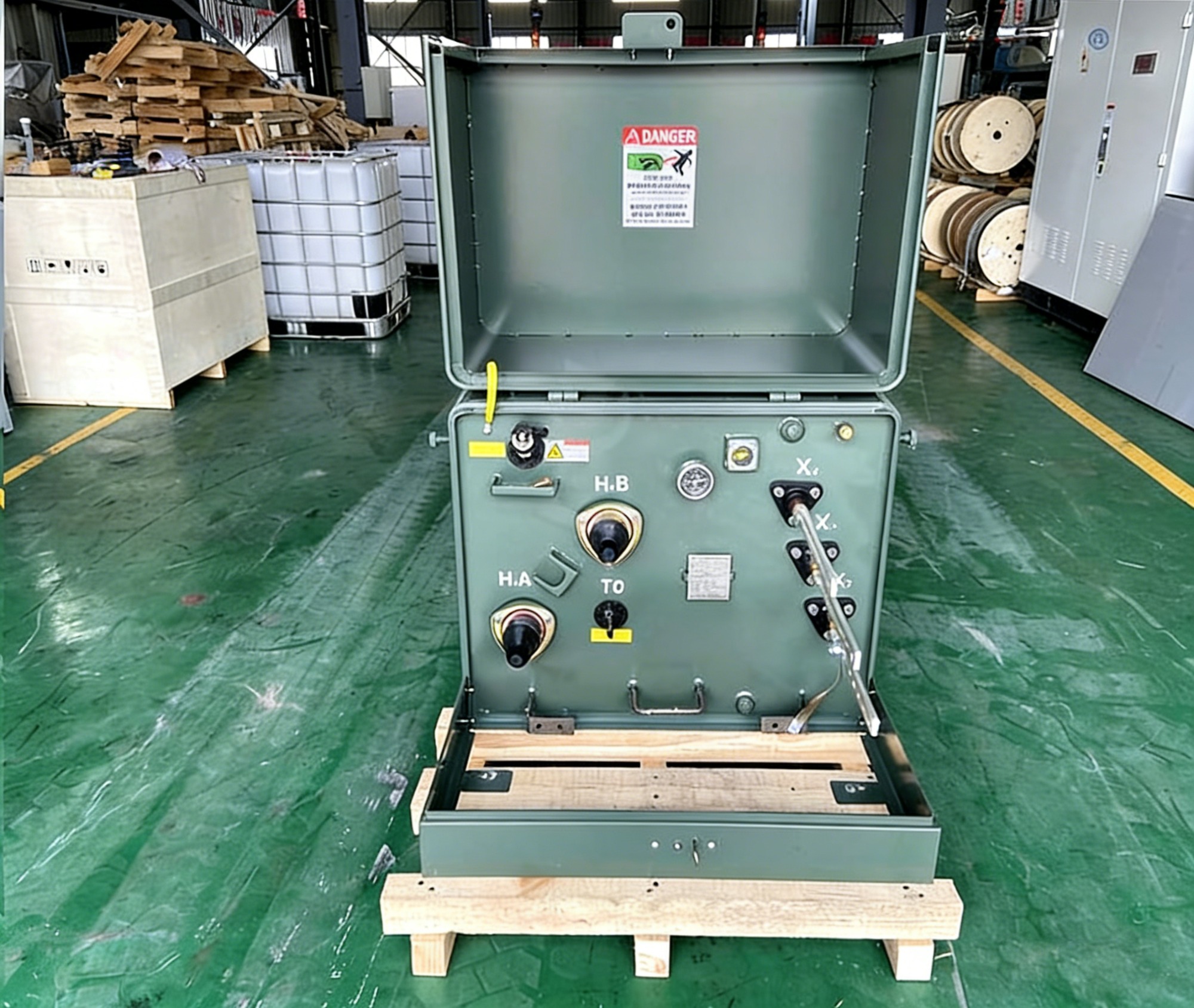
II. Core Components of a Single-Phase Pad-Mounted Oil-Immersed Transformer
A durable single-phase pad-mounted oil-immersed transformer relies on high-quality components—each part plays a key role, and the materials and craftsmanship directly determine its service life in harsh overseas environments. Here’s a breakdown of the core components:
1.Iron Core: Made of high-grade silicon steel sheets, it features low loss and low noise—essential for converting electrical energy and ensuring stable operation.2.Windings: There are two types—copper windings and aluminum windings (more on this later). Their core function is voltage transformation, directly affecting the transformer’s loss and service life.3.Insulating Oil: Two common types—mineral oil and vegetable oil (detailed later). It cools, insulates, and extinguishes arcs, ensuring the transformer runs stably.4.Sealed Oil Tank: Fully sealed to prevent rain, dust, and leakage—critical for outdoor use in overseas regions.5.Protection Devices: Standard features include pressure relief valves and oil temperature protection, which monitor the transformer’s operation in real time and respond promptly to abnormalities.
These components work together seamlessly; the quality of materials and craftsmanship directly determines how well the transformer performs in harsh overseas environments.
III. Working Principle of a Single-Phase Pad-Mounted Oil-Immersed Transformer
The principle is straightforward: It relies on electromagnetic induction to convert medium and high-voltage electrical energy (such as 13.2kV and 24.94kV) into low-voltage electrical energy (such as 120/240V and 240/480V), meeting daily and industrial power needs. When the transformer operates, it generates heat—this heat is dissipated quickly by the insulating oil, ensuring long-term stable operation.
This is what we call the ONAN self-cooling method, the most common cooling method for outdoor overseas projects. It requires no additional cooling equipment, making it extremely convenient for on-site use.
IV. Core Advantages for Overseas Projects
After years of working on overseas projects, I’ve summed up its core advantages—safe, durable, cost-effective, and space-saving—perfectly aligned with the actual needs of overseas power distribution projects:
- High Safety: Fully sealed design with no exposed live parts, complying with strict overseas safety standards (such as ANSI and IEEE). It’s safe to install in crowded areas like residential districts, roadsides, and parks.
- Durable & Weather-Resistant: It’s highly resistant to rain, moisture, and salt spray—able to withstand harsh overseas climates like coastal salt spray and high temperatures, requiring no dedicated protective structures.
- Energy-Saving & Cost-Effective: Its loss is much lower than that of old-fashioned transformers, meeting overseas energy efficiency standards (such as DOE and CSA). Over the long term, it significantly reduces electricity costs for projects.
- Space-Saving & Aesthetic: No need for a dedicated power distribution room—just place it on a concrete base. It’s highly concealed and won’t damage the surrounding landscape, making it ideal for areas with high aesthetic requirements (like residential districts).
- Long Service Life & Low Maintenance: With good sealing and high-quality components, it can last over 20 years with minimal maintenance—greatly reducing the later operation and maintenance costs for overseas projects.
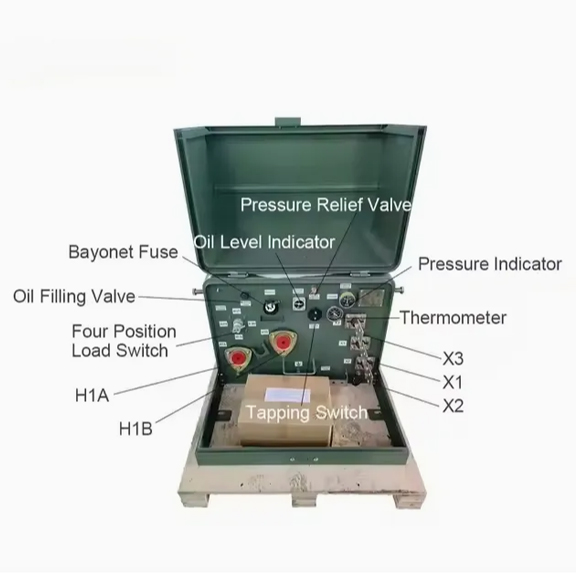
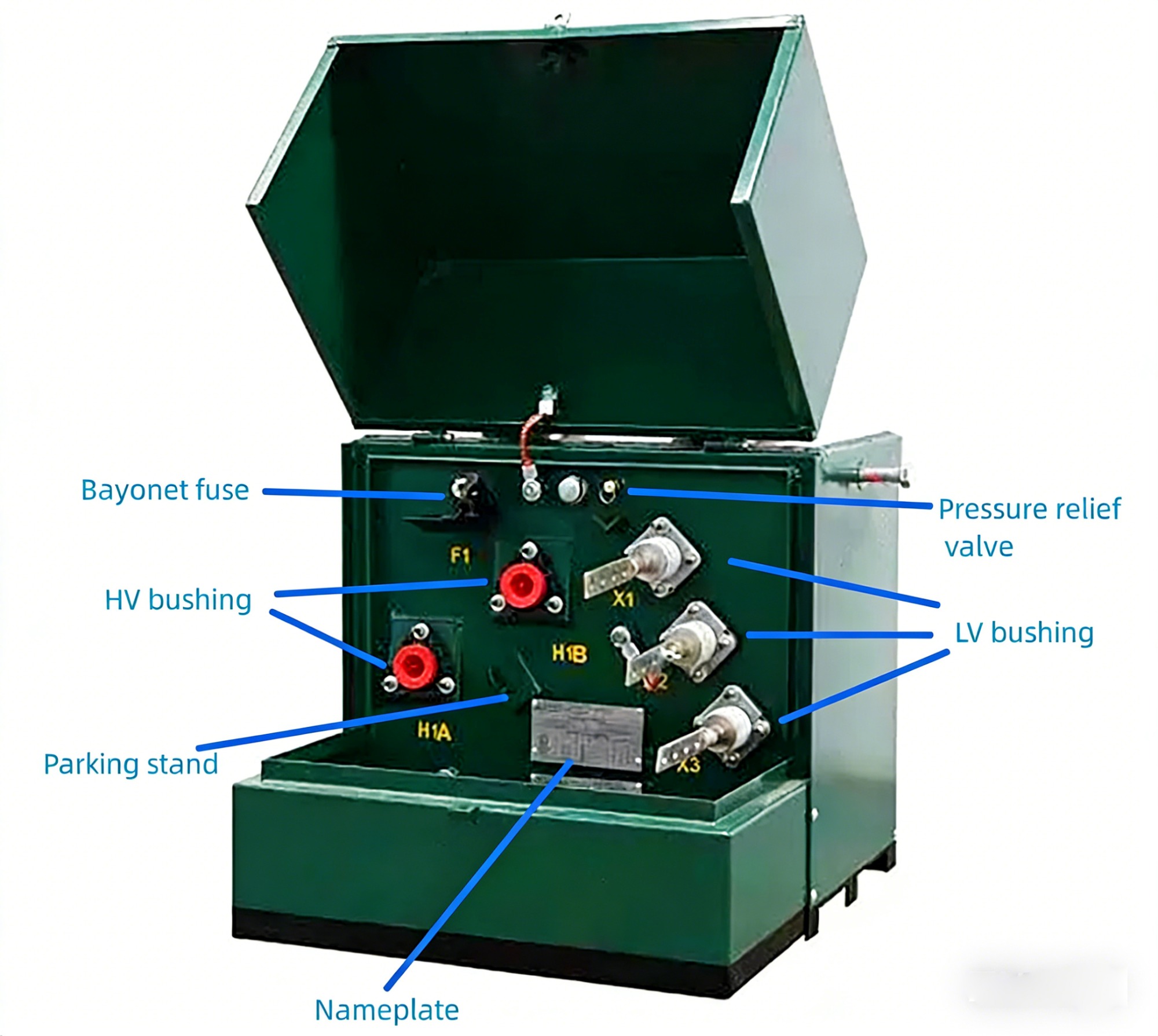
V. Common Specifications for Overseas Projects
The commonly used models for overseas projects are fixed, with core specifications that align with regional power grid standards. The 167kVA model is in extremely high demand and is almost a bestseller for overseas projects. Here are the key specifications:
1.Capacity: 15kVA, 25kVA, 50kVA, 100kVA, 167kVA, 250kVA, 333kVA (choose based on project power needs);2.High Voltage: 13.2kV, 12.47kV, 24.94kV, 34.5kV (all common high-voltage specifications for overseas projects, matching local power grid standards);3.Low Voltage: 120/240V, 240/480V (adapting to overseas civilian and industrial power needs);4.Frequency: 50Hz / 60Hz (match the local power grid frequency—North America mostly uses 60Hz, while the Middle East and Australia use both 50Hz and 60Hz);5.Cooling Method: ONAN self-cooling (the most common cooling method for outdoor overseas projects, no additional cooling equipment needed).
VI. Application Scenarios for Overseas Projects
Its application scenarios are clear, especially suitable for overseas projects with high safety and aesthetic requirements. Here are the most common scenarios:
1.Residential areas and villa districts (safe, space-saving, and aesthetic—no impact on the living environment);2.Urban underground power grids, street lights, and public facilities (easy to install, no need for large-scale construction);3.Supporting power distribution for photovoltaic power plants and energy storage BESS projects (adapting to the core needs of new energy overseas projects);4.Schools, hospitals, shopping malls, parks, and other crowded places (safety is the top priority);5.Overseas regions with high safety and aesthetic requirements (fully complying with local standards).
These are the most common application scenarios for single-phase pad-mounted oil-immersed transformers in overseas projects—choosing this transformer ensures it perfectly fits the on-site needs.
VII. How to Choose a Single-Phase Pad-Mounted Oil-Immersed Transformer for Overseas Projects (Pitfall Avoidance Guide)
When choosing a single-phase pad-mounted oil-immersed transformer for overseas projects, the core principle is to match project needs and local standards—there’s no need to pursue high-end options; the right one is the best. This is also the core logic for selecting a single-phase pad-mounted oil-immersed transformer. Remember these steps to avoid pitfalls:
- Calculate Load & Determine Capacity: First, calculate the total power consumption of the project, then select the corresponding capacity (unit: kVA). It’s recommended to choose a slightly larger capacity to avoid full-load operation, which extends the transformer’s service life and reduces failure risks.
- Match Voltage & Frequency to Local Power Grid: High voltage, low voltage, and frequency must fully match local standards. For example, North America mostly uses 120/240V low voltage and 60Hz frequency, while some Middle Eastern regions use 24.94kV high voltage and 50Hz frequency. A single mismatch will render the transformer unusable—don’t be careless.
- Choose Between Copper & Aluminum Windings: The main differences lie in loss, service life, and cost. For long-term stability and sufficient budget, choose copper windings (low loss, long service life); for limited budget and short-term use, choose aluminum windings. Both are suitable for regular overseas projects. Brief summary: For sufficient budget and long-term stability, choose copper windings; for limited budget and short-term use, choose aluminum windings—both are suitable for regular overseas projects.
- Choose Insulating Oil: For regular overseas projects, choose mineral oil (cost-effective); for projects with high environmental and fire protection requirements (such as residential areas), choose vegetable oil. Both comply with relevant overseas standards. Brief summary: Choose mineral oil for regular projects (cost-effective) and vegetable oil for projects with high environmental/fire protection requirements (such as residential areas)—both meet overseas standards.
- Verify Overseas Certifications: Different regions have different certification requirements. For example, North American projects require ANSI, IEEE, CSA, and UL certifications; Middle Eastern and Australian projects also have corresponding local certifications. Ensure the transformer has the required certifications—otherwise, project acceptance will fail. This is a core requirement for overseas project procurement.
VIII. Maintenance Tips for Single-Phase Pad-Mounted Oil-Immersed Transformers
Maintaining a single-phase pad-mounted oil-immersed transformer is extremely simple—no need for much manpower or material resources. Follow these steps to ensure it lasts over 20 years and reduce operation and maintenance costs:
1.Regularly inspect the transformer’s exterior for oil leaks or rust—address issues promptly if found;2.Check the insulating oil level and quality once a year to ensure it meets standards and replace it if it deteriorates;3.Regularly tighten terminal connections to avoid poor contact and equipment failure;4.Keep the area around the transformer clean and well-ventilated—don’t pile debris, as it affects heat dissipation;5.Regularly test protection devices to ensure they respond promptly to abnormalities.
IX. Why More Overseas Projects Choose Single-Phase Pad-Mounted Oil-Immersed Transformers
Why are more and more overseas projects choosing single-phase pad-mounted oil-immersed transformers? The core reason is that this transformer, commonly used in overseas projects, achieves "convenience, cost-saving, safety, and stability"—solving key pain points for overseas developers, power grid companies, and engineering firms:
1.Convenient Installation: No need for utility poles or power distribution rooms, reducing on-site construction work and saving time;2.Cost-Effective: Low procurement and operation costs, with long service life and low later maintenance costs;3.Safe & Stable: Fully sealed design, complying with strict overseas safety standards, with no exposed live parts—avoiding safety hazards;4.Wide Adaptability: Suitable for various overseas climates (coastal salt spray, high temperatures, high humidity) and power grid standards, requiring no additional modifications.
Conclusion
To be honest, while single-phase pad-mounted oil-immersed transformers are small, they play a crucial role in the stability of overseas power distribution systems. Don’t choose based solely on price—focus on three key points: stable structure, good sealing, and compliance with local standards. This ensures long-term stable operation and reduces later troubles.
Whether you’re a purchaser, designer, or project manager, keeping these points in mind will help you avoid pitfalls during selection, pricing, and project planning, reducing project risks. If your overseas power distribution project requires a single-phase pad-mounted oil-immersed transformer that meets local standards, you can directly contact us to get a free customized specification plan, view detailed parameters of each model, and check overseas certification reports—tailored to your overseas project needs, helping you advance the project smoothly.

 How to Choose the Right Residential Load Center: The Complete Buying Guide
 Laos Electricité du Laos (EDL) Delegation Visits Beite Transformer Co., Ltd. for Technical Exchange and Strategic Cooperation,Company News
 Inside a Transformer Insulation Material Factory: How Reliable Insulation Components Are Manufactured
 Insulation Coordination for Low-Voltage Switchgear: IEC 61439 Design Requirements Explained

