Water-cooled capacitors are capacitors that utilize circulating water or other cooling fluids for forced heat dissipation. They are primarily used in high power density and high current applications, such as new energy, rail transit, and high-power frequency converters.
This article will introduce the differences, functions, installation methods, and usage environments of these two types of capacitors.
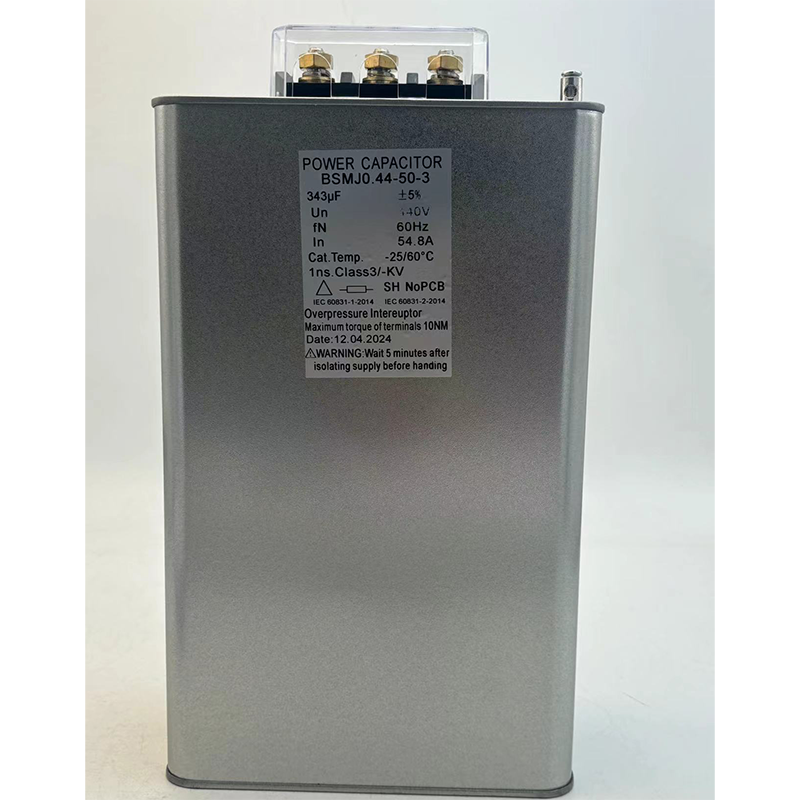
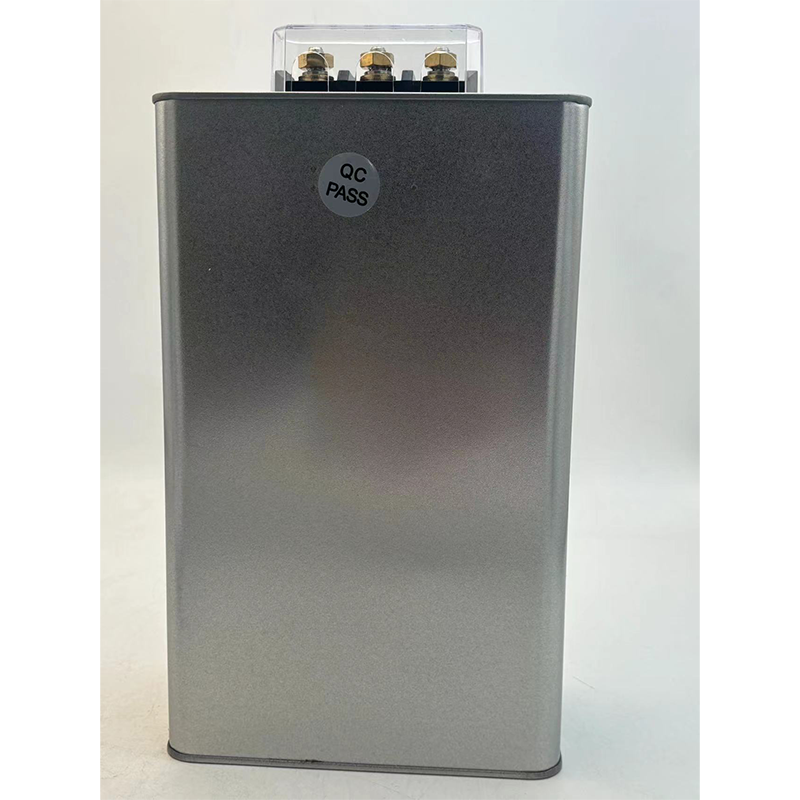
Characteristics of power capacitors:
Medium material: Metallic film (such as polypropylene film) or oil immersed paper medium is often used, which is resistant to high pressure and has a large capacity.
Cooling method: Natural air cooling (relying on surface area for heat dissipation), without the need for an additional cooling system.
Capacity and Voltage: The capacity range is large (from a few microfarads to several thousand microfarads), with voltage levels ranging from low voltage (400V) to high voltage (above 10kV).
Characteristics of water-cooled capacitors:
Dielectric material: Similar to power capacitors, but designed with integrated cooling channels.
Cooling method: Circulating coolant through internal or external water-cooled pipelines (such as copper pipes), the heat dissipation efficiency is much higher than natural cooling.
Capacity and current: Suitable for high-frequency and high current conditions (such as over 100 amperes), with a relatively compact volume.
| Comparison items |
Power Capacitor |
Water Cooled Capacitor |
| Cooling method |
Natural cooling or air cooling |
Forced water cooling (circulating coolant) |
| Power carrying capacity |
Suitable for medium to high power applications |
Suitable for ultra-high power and high-frequency environments |
| operation temperature |
Dependent on environmental temperature |
Can work stably in high-temperature environments |
| volume |
Large volume (dependent on heat dissipation space) |
More compact (efficient heat dissipation design) |
| Typical applications |
Reactive power compensation, filtering, power system |
High frequency inverters, induction heating, laser equipment, electric vehicles |
| Installation method |
Fixed bracket or cabinet installation |
Need to connect the water cooling system |
| Maintenance Requirements |
Low (maintenance free or regular inspection) |
Need to maintain the cooling system (anti blocking, anti leakage) |
Above, we have learned about the differences between power capacitors and water-cooled capacitors. Now, let me further understand their applicable scenarios and usage environments for you.
Power Capacitor
Applicable scenarios:
Reactive power compensation in power systems (improving power factor)
Industrial power grid harmonic filtering (such as frequency converter matching)
New energy generation (wind power, photovoltaic inverter system)
Environmental requirements:
Suitable for regular temperature environments (-25 ° C~+60 ° C)
Good ventilation is required to avoid high-temperature accumulation
Dustproof and moisture-proof (some models are designed for outdoor protection)
Water-Cooled Capacitor
Applicable scenarios:
High frequency high current equipment (such as induction heating, laser cutting)
Electric vehicle charging station, motor drive system
High power density applications (such as medical imaging equipment, industrial welding)
Environmental requirements:
Suitable for high temperature and enclosed spaces (water cooling system can actively control temperature)
Need to be equipped with a coolant circulation system (antifreeze or deionized water)
Need to prevent blockage or leakage of cooling pipes
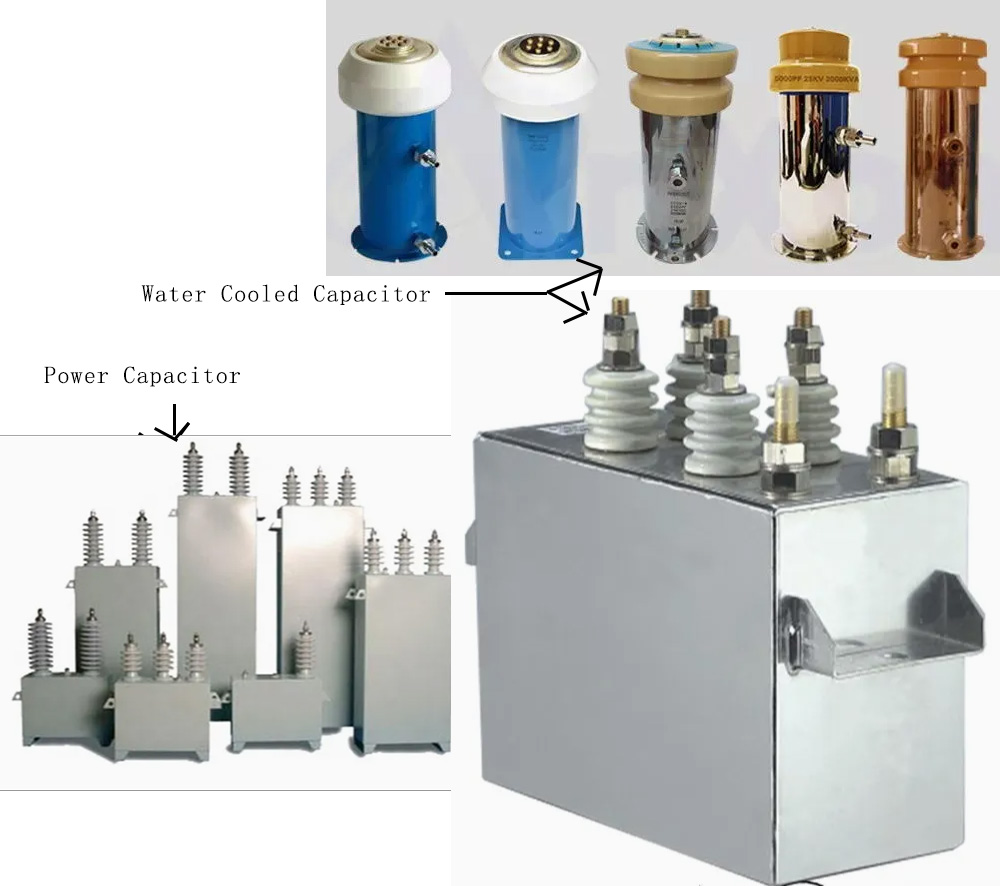
Comparison of installation methods
Power Capacitor
Typical installation method:
Installation inside the cabinet: fixed inside the distribution cabinet using bolts or guide rails
Bracket installation: Large capacitor banks require dedicated brackets for support
Wiring method: Copper bar or cable connection to ensure low contact resistance
matters needing attention:
Maintain ventilation and heat dissipation, avoid dense stacking
Need to consider safety distance (to prevent arc discharge)
Regularly check for signs of aging such as capacitor bulges and leakage
Induction Heating & Melting CapacitorsTypical installation method:
Water cooling pipeline connection: requires connection to the coolant circulation system (inlet/outlet)
Compact installation: usually directly fixed on the device cooling board
Electrical connection: High frequency and low sensitivity design to reduce the influence of parasitic parameters
matters needing attention:
Ensure sufficient coolant flow (avoid local overheating)
Prevent coolant leakage (which may corrode the circuit)
Regularly check the cooling system (filter, pump status)
Having learned so much about power capacitors and water-cooled capacitors, I still don't quite understand how to choose the appropriate ones?
It's okay, I will tell you how to choose suitable power capacitors and water-cooled capacitors in the end.
| selection criteria |
Power Capacitor |
Water Cooled Capacitor |
| High voltage and large capacity requirements |
Suitable for (such as 10kV or above) |
Usually used for low voltage and high current |
| High frequency, high power density |
Limited heat dissipation capability |
Water cooling for efficient heat dissipation |
| Maintenance free requirement |
Simple structure with minimal maintenance |
Need to maintain the cooling system |
| Space restricted environment |
Large volume |
Compactness |
Power capacitors are suitable for conventional power systems, such as reactive power compensation, harmonic control, etc. They are easy to install and have low maintenance costs.
Water cooled capacitors are suitable for high-frequency and high-power scenarios, such as electric vehicles and industrial heating equipment, which require a cooling system but have higher heat dissipation efficiency.
Choosing the correct type of capacitor can improve system efficiency, extend equipment lifespan, and reduce the risk of failure. Choose the capacitor you need correctly according to the above content.

 How to Choose the Right Residential Load Center: The Complete Buying Guide
 Laos Electricité du Laos (EDL) Delegation Visits Beite Transformer Co., Ltd. for Technical Exchange and Strategic Cooperation,Company News
 Inside a Transformer Insulation Material Factory: How Reliable Insulation Components Are Manufactured
 Insulation Coordination for Low-Voltage Switchgear: IEC 61439 Design Requirements Explained

